
What to Do Instead of Scrolling in Bed (Keep the Phone)
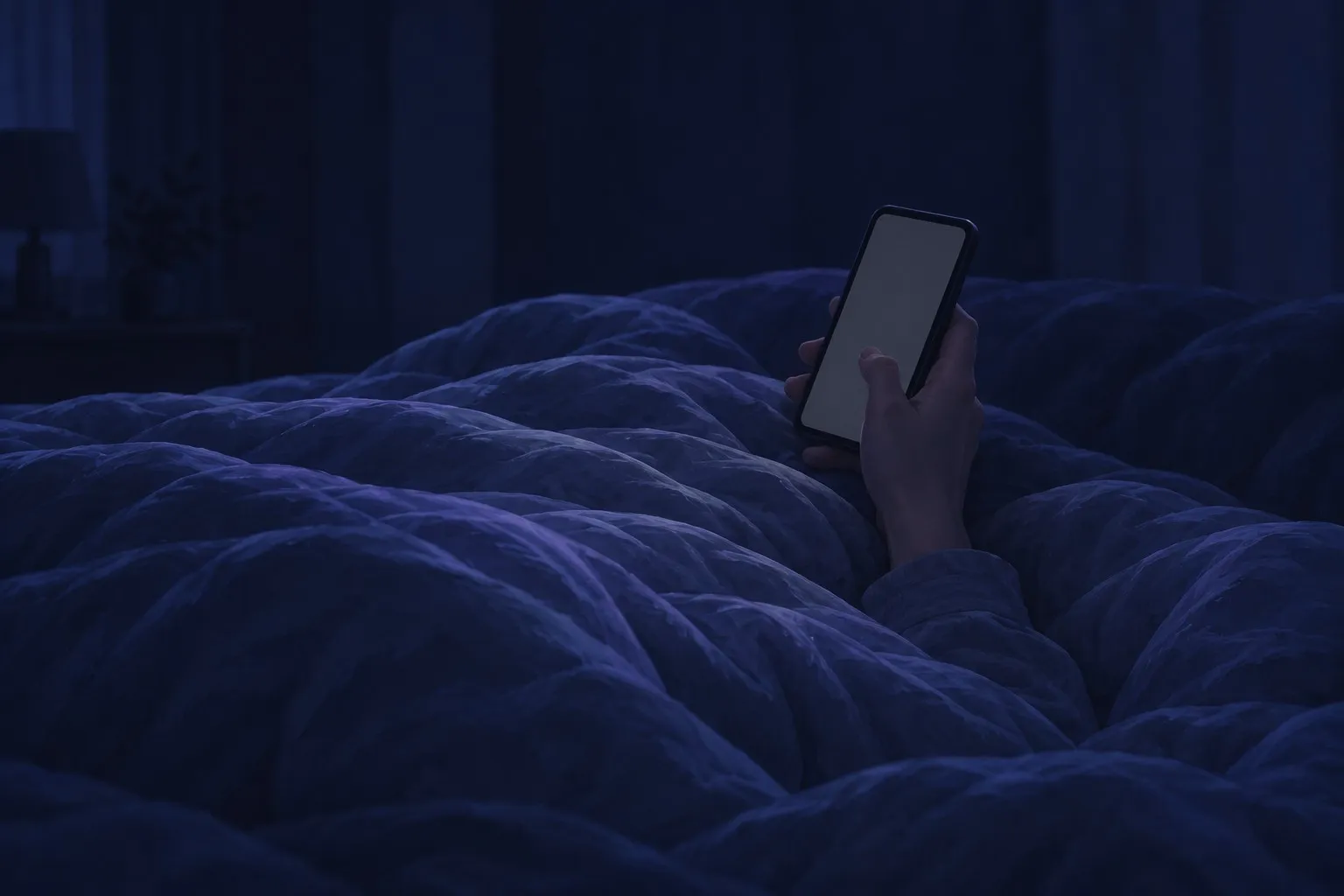
You just searched “what to do instead of scrolling in bed” on the same phone you’re trying to put down.
You’ve probably tried the usual fixes already. You set a Screen Time limit, and the first night it popped up you tapped Ignore Limit. You tried charging the phone in another room and brought it back, because it’s also your alarm. I think both fail for the same reason. They ask you to give the phone up at the hour you have the least fight left in you, and Ignore Limit is two taps away. Nobody has ever been lying in bed at 12:47 a.m. and thought, “I feel so motivated to put my phone on the nightstand right now.”
So keep the phone, and change what it does for the last few minutes before you sleep. Instead of scrolling, dim the screen as far as it goes, put what’s in your head onto paper, and breathe out longer than you breathe in.
Why scrolling in bed is so hard to stop
Feeds and apps were built to be hard to put down. Every swipe might bring something new, like a text, a video, or a headline that makes your stomach drop. So you keep swiping for one more, long after you’ve stopped enjoying any of it.
For a lot of us, bedtime is also the first quiet moment of the whole day. The second the lights go off, everything you pushed aside comes rushing in, from the email you still owe and tomorrow’s meeting to the thing your sister said. Scrolling drowns that out. You’re using the phone so you don’t have to be alone with your own head, so whatever replaces it has to give your head something to do.
Dim the screen as far as it goes
Turn the brightness all the way down first. Swipe down from the top-right corner (on iPhones with a Home button, swipe up from the bottom) and drag the brightness slider to the bottom. You can do it now, while you’re reading.
Then go darker than the slider can. In Settings > Accessibility > Display & Text Size, turn on Reduce White Point. On the same page, turn on Color Filters and choose Grayscale. A dim gray feed is a lot less fun to keep swiping.
You don’t have to dig through Settings every night. Go to Settings > Accessibility > Accessibility Shortcut and select Reduce White Point and Color Filters. After that, a triple-click of the side button brings them up, so you can switch them on at night and off again in the morning.
Write down what’s in your head and leave it for tomorrow
Put everything that’s spinning in your head onto paper. A notebook or any scrap will do, and if the paper is downstairs, the Notes app with the screen still dim works too. Write down the reply you’re still drafting in your head, the to-dos, the worries, the random stuff. If you’re scrolling because of someone else, waiting to see whether they replied or what they posted, that goes on the page too. It doesn’t have to be pretty or make sense.
Then close the notebook and let all of it be tomorrow’s problem. It’ll still be there in the morning, and you’ll be in better shape to deal with it.
Breathe out longer than you breathe in
Close the feed and breathe out slowly, for longer than you breathed in. Purse your lips like you’re blowing through a straw and let the air go slowly. When it’s all out, don’t pull the next breath in. Let it come in through your nose by itself, and do that five times. There’s nothing to count.
Your heart beats a little slower while you breathe out, and a longer out-breath gives you more of that slower stretch. If you start to feel short of air, go back to breathing normally for a while.
Tomorrow night, set it up before you get into bed
Set things up earlier in the evening, so the version of you in bed has less to decide. Turn on the triple-click shortcut, and put a notebook and pen on the nightstand. If you’d rather read than breathe, leave a paper book there, one you’re not dying to finish. A thriller with a cliffhanger every chapter is just scrolling in hardcover.
What to do instead of scrolling tonight
- Turn the brightness all the way down, and switch on Reduce White Point and Grayscale.
- Write down what’s in your head and leave it for tomorrow.
- Close the feed and breathe out slowly, longer than you breathed in, five times.
ZEN BUBBLE is an iPhone app where, at night, the screen is a dark lake with nothing to scroll and nothing to count. You breathe out toward the microphone, which listens for your breath and doesn’t record your voice, and watch soap bubbles drift out over the water. If you’d like, give it a try tonight.
Questions
Is it bad to scroll on my phone right before bed?
Mostly, yes. Feeds are built so that every swipe might bring something new, which keeps your brain busy right when it's trying to settle. You don't have to give up the phone to change that, though. Dim the screen and spend the last few minutes on something that doesn't scroll.
Why don't Screen Time limits stop me from scrolling at night?
Ignore Limit is only two taps away, and at midnight those two taps are easy. Charging the phone in another room runs into the same problem when the phone is also your alarm. Changing what the phone does for the last few minutes asks less of you than locking it away.
How do I make my iPhone screen darker than the lowest brightness setting?
Go to Settings > Accessibility > Display & Text Size and turn on Reduce White Point, which dims the screen past what the brightness slider can do. On the same page, you can turn on Color Filters and choose Grayscale. If you add both under Settings > Accessibility > Accessibility Shortcut, a triple-click of the side button lets you switch them on at night and off in the morning.
What kind of breathing can I do in bed to wind down?
Purse your lips and breathe out slowly, for longer than you breathed in, as if you were blowing through a straw. When the air is out, let the next breath come in through your nose by itself instead of pulling it in. Five breaths like that is enough, and there's nothing to count.
What if I still can't sleep after trying this?
Some nights it just takes longer. If you have trouble sleeping most nights for more than a couple of weeks, or it's starting to affect your days, it's worth talking to a doctor.